Pond Cleaning London Problems? Here Are the Proven Solutions for Your Garden in 2026
Understanding the Importance of Pond Cleaning in London
Pond cleaning is not just a necessity; it’s a crucial aspect of maintaining a healthy and thriving ecosystem within your garden. Especially in urban environments like London, where water bodies can easily become contaminated, understanding the significance of regular pond maintenance is essential for both aesthetic and ecological reasons. The process of cleaning your pond affects not only its beauty but also the well-being of the aquatic life it supports. When exploring options, Pond Cleaning London offers comprehensive insights into maintaining the ideal environment for your fish and plants.
Why Regular Maintenance is Essential
Regular maintenance ensures that your pond remains a vibrant habitat. Accumulation of debris, fallen leaves, and organic waste can result in poor water quality, which may be detrimental to fish and plants alike. Cleaning your pond on a routine basis helps to:
- Improve Water Quality: Clear water promotes healthy fish and aquatic plants.
- Prevent Algae Growth: Algae can compete with beneficial plants for nutrients and light.
- Enhance Aesthetic Appeal: A clean pond makes your garden more visually pleasing.
Common Issues Faced by Pond Owners
Pond owners often encounter various challenges that can arise from neglecting regular cleaning practices:
- Excessive Algae Blooms: These can cause major disruptions in your pond’s ecosystem.
- Filtration Problems: Clogged filters can lead to poor water circulation.
- Increased Mosquito Breeding: Stagnant waters encourage mosquito populations, leading to bites and potential diseases.
The Environmental Impact of Clean Ponds
Maintaining a clean pond is beneficial not only for the pond owner but also for the local ecosystem. Clean ponds support biodiversity by providing safe habitats for various species. They also play a crucial role in filtering pollutants and reducing runoff, contributing to a healthier environment.
Effective Pond Cleaning Techniques
Step-by-Step Guide to Pond Cleaning
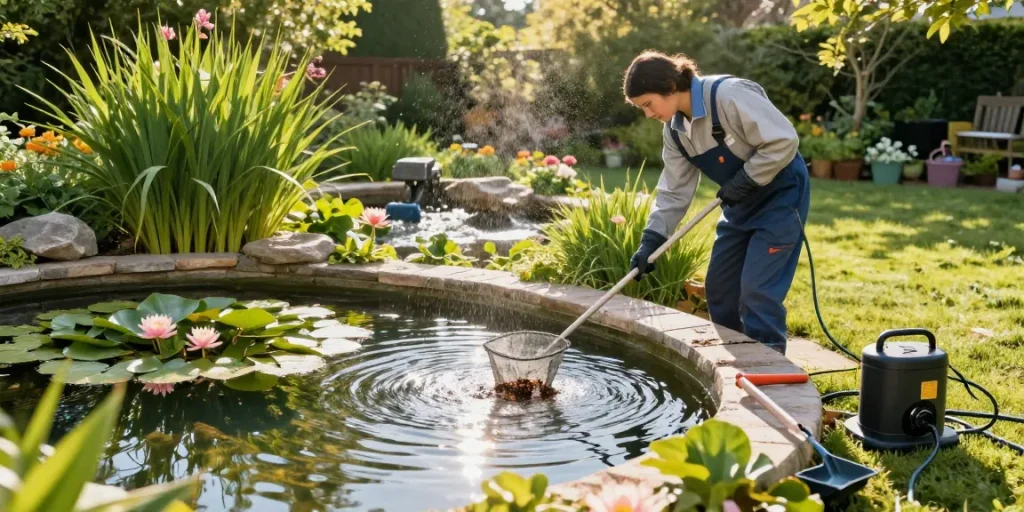
Cleaning your pond can be a straightforward process if done correctly. Here’s a simplified guide:
- Remove Debris: Use a fine mesh net to scoop out leaves and debris.
- Drain the Pond: If necessary, lower the water level for more thorough cleaning.
- Clean the Liner: Scrub the pond liner with a pond-safe cleaner to remove algae.
- Inspect and Clean Equipment: Check filters, pumps, and skimmers and clean or replace them as needed.
- Refill and Treat the Water: After cleaning, refill the pond and treat the water to restore balance.
Best Tools and Equipment for Pond Care
Utilizing the right tools can significantly enhance your pond cleaning experience. Essential equipment includes:
- Pond Net: For removing debris and floating plants.
- Algae Scrapers: To keep surfaces clean.
- Water Testing Kits: For monitoring water quality parameters.
Choosing the Right Cleaning Products for Your Pond
Choosing eco-friendly products is critical to maintaining the pond’s ecosystem. Look for:
- Bacterial Additives: These help break down waste naturally.
- Plant-Safe Algaecides: If chemical solutions are needed, ensure they are safe for aquatic life.
Hiring Professionals for Pond Cleaning in London
What to Look for in a Pond Cleaning Service
When searching for a professional pond cleaning service, consider factors such as:
- Experience: Look for a company with proven expertise in pond maintenance.
- Customer Reviews: Check testimonials and ratings for insight into their service quality.
- Certification: Ensure they are certified and knowledgeable about local aquatic regulations.
Benefits of Professional Pond Maintenance
Hiring professionals offers several advantages, including:
- Expertise: Professionals possess specialized knowledge to address unique pond issues.
- Time-Saving: Cleaning can be time-consuming; professionals handle it efficiently.
- Long-Term Health: Regular professional maintenance can extend the life of your pond.
Cost Considerations and Budgeting for Services
Understanding the costs associated with pond cleaning is important for budgeting. Factors affecting pricing include:
- Pond Size: Larger ponds require more time and resources.
- Frequency of Cleaning: More frequent cleaning can lead to lower per-visit costs.
Case Studies: Successful Pond Cleanings in London
Before and After: Stunning Transformations
Numerous case studies highlight the dramatic transformations achievable through professional pond cleaning services. For instance, a neglected 50-square-meter pond in North London was revitalized over a weekend, revealing a vibrant ecosystem that had been hidden under decades of sludge.
Customer Testimonials and Experiences
Clients often share their satisfaction with the revitalization of their ponds. One local resident noted, “After the cleaning, my pond became a focal point of my garden that attracted not just fish but also family and friends.”
Lessons Learned from Professional Cleanings
Many customers have learned invaluable lessons about pond maintenance through professional services, such as the importance of regular upkeep to prevent major issues from arising. These insights reinforce the value of investing in expert assistance.
Future Trends in Pond Care for 2026
Innovative Cleaning Technologies on the Horizon
The future of pond care will likely see the introduction of smart pond maintenance systems that monitor water conditions in real-time and recommend cleaning schedules based on environmental data.
Emerging Trends in Eco-Friendly Pond Maintenance
As sustainability becomes a priority, more pond owners are looking for eco-friendly solutions. The use of biological cleaners and natural filtration systems will continue to rise.
Preparing Your Pond for Seasonal Changes
Seasonal changes can drastically affect pond health. Regular checks before and after winter can help prevent issues such as frozen pipes or oxygen depletion in fish during colder months. Preparing your pond includes:
- Removing Debris: Clear out any leftover leaves before winter.
- Adjusting Aeration: Ensure that your pond remains oxygenated during cold spells.
What Are the Common Pond Cleaning Mistakes?
Many pond owners can make avoidable mistakes during cleaning, such as:
- Over-cleaning: Removing too many beneficial bacteria can disrupt the ecosystem.
- Ignoring Water Levels: Draining too much water can stress fish and other aquatic life.
How Often Should You Clean Your Pond?
Cleaning frequency can depend on several factors, such as pond size, the number of fish, and nearby vegetation. Generally, a thorough clean is recommended once or twice a year, with lighter maintenance every month.
What Can You Do to Prevent Algae Growth?
To minimize algae blooms, consider:
- Increasing Plant Coverage: Aquatic plants can compete with algae for nutrients.
- Regular Water Testing: Maintain balanced pH and nutrient levels.
How Do Weather Conditions Affect Pond Maintenance?
Weather can significantly impact pond cleaning schedules. For example, heavy rainfall can introduce excess nutrients, leading to algae outbreaks. Conversely, prolonged heat can cause water evaporation and raise temperatures, stressing aquatic life.
What is the Best Time of Year for Pond Cleaning?
Spring is traditionally the best time for pond cleaning, as it prepares the water for the warmer months ahead. Cleaning in the fall can also be beneficial, particularly in preparing the pond for winter.