
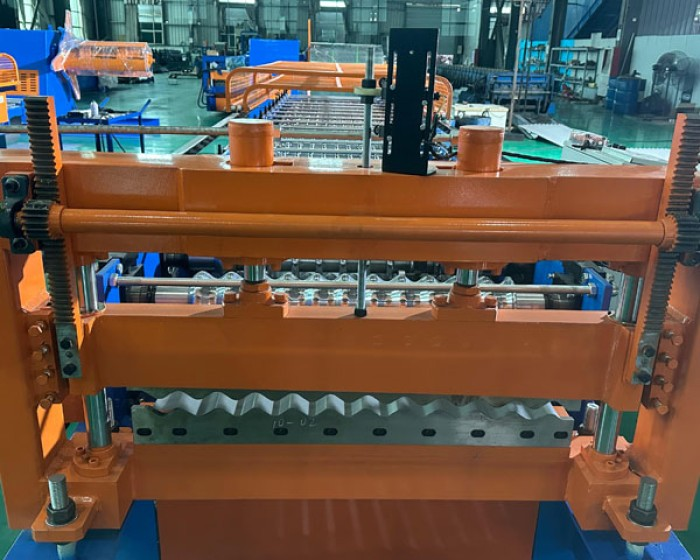
Steel framing technology has transformed modern construction by providing strong, precise, and long-lasting structural solutions for a wide range of building projects. As construction demands continue to evolve, builders and manufacturers are choosing steel framing because it delivers consistent quality, faster installation, and reliable structural performance. Advanced manufacturing equipment ensures that steel components are produced with exceptional accuracy, helping create buildings that can withstand daily use and environmental challenges. Modern machines such as the double layer roll forming machine and floor deck roll forming machine play a significant role in producing high-quality steel components for durable construction systems.
What Is Steel Framing Technology?
Steel framing technology involves manufacturing cold-formed steel components that are assembled to create the structural framework of a building. Precision roll forming equipment shapes steel coils into beams, studs, tracks, and other structural profiles with consistent dimensions.
Because each component is manufactured accurately, steel framing systems fit together efficiently during installation, improving both construction speed and structural reliability.
How Steel Framing Technology Builds Durable Structures
High Structural Strength
Steel provides an excellent strength-to-weight ratio, allowing structures to support heavy loads while maintaining overall stability. This makes steel framing suitable for residential, commercial, and industrial buildings.
Precision Manufacturing
Advanced production equipment manufactures steel components with uniform dimensions and accurate profiles. Precision reduces installation errors and improves the overall integrity of the finished structure.
Resistance to Environmental Conditions
Steel framing does not warp, shrink, or crack like some traditional building materials. Properly manufactured steel components maintain their performance over many years with minimal maintenance.
Faster Construction
Prefabricated steel framing components are ready for assembly upon delivery, reducing construction time and improving project efficiency without sacrificing quality.
Efficient Material Usage
Modern roll forming technology maximizes the use of raw materials while minimizing production waste. Efficient manufacturing lowers costs and supports sustainable construction practices.
Applications of Steel Framing Technology
Steel framing systems are widely used in residential homes, commercial buildings, office complexes, warehouses, industrial facilities, modular buildings, educational institutions, healthcare centers, and infrastructure projects. Their versatility makes them suitable for projects of various sizes and complexities.
Benefits of Steel Framing Systems
- High structural durability
- Precise component manufacturing
- Faster construction schedules
- Reduced material waste
- Lower maintenance requirements
- Flexible building design
- Long-term structural reliability
Selecting Reliable Manufacturing Equipment
Manufacturers should choose roll forming equipment that offers precision engineering, advanced automation, high production capacity, and dependable long-term performance. Reliable machinery ensures consistent product quality while supporting efficient manufacturing operations.
Investing in modern equipment also allows manufacturers to respond to increasing market demand while maintaining stable production.
Conclusion
Steel framing technology plays a vital role in creating durable structures by combining precision manufacturing, structural strength, efficient production, and long-term reliability. Its ability to improve construction quality while reducing project timelines has made steel framing a preferred solution for modern building projects.
Whether utilizing a double layer roll forming machine for flexible panel production or a floor deck roll forming machine for manufacturing durable structural decking components, advanced roll forming technology helps manufacturers produce high-quality steel framing systems that support stronger and longer-lasting buildings.