
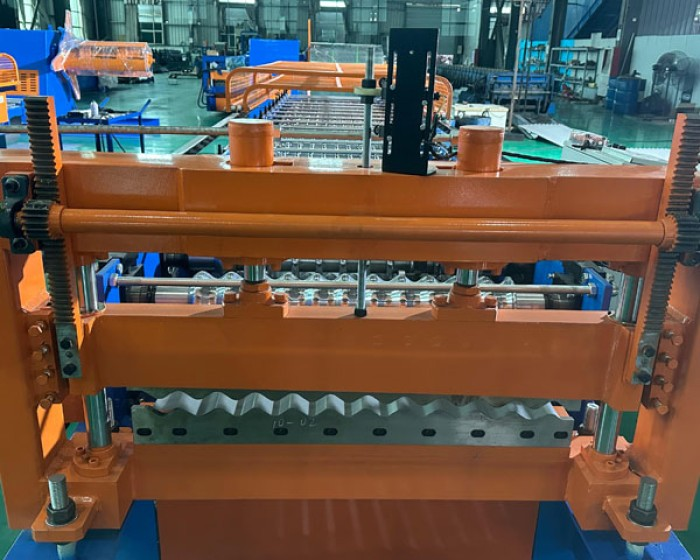
Light steel construction has become an increasingly popular building method due to its strength, efficiency, and versatility. As the construction industry continues to seek faster and more sustainable solutions, light steel structures offer significant advantages over many traditional building materials. Precision-manufactured steel components provide excellent structural performance while reducing construction time and improving overall project efficiency. Modern manufacturing equipment such as the double layer roll forming machine and floor deck roll forming machine helps produce high-quality steel components that support reliable and durable building systems.
What Is Light Steel Construction?
Light steel construction uses cold-formed steel sections to create structural frameworks for residential, commercial, and industrial buildings. These steel members are manufactured with precise dimensions, allowing them to fit together accurately during installation.
Because steel components are lightweight yet highly durable, they simplify transportation, handling, and on-site assembly while maintaining excellent structural strength.
How Light Steel Construction Improves Building Performance
Enhanced Structural Strength
Light steel offers a high strength-to-weight ratio, allowing buildings to support heavy loads while using less structural material. This creates strong and stable structures suitable for a wide range of applications.
Faster Construction
Prefabricated steel components arrive ready for installation, reducing on-site fabrication and shortening construction schedules. Faster project completion helps lower labor costs and improves overall efficiency.
Improved Dimensional Accuracy
Steel components are manufactured using precision equipment, ensuring consistent dimensions throughout every production run. Accurate parts simplify installation and improve overall building quality.
Better Material Efficiency
Precision manufacturing reduces unnecessary material waste during production. Efficient use of raw materials supports cost-effective construction and sustainable building practices.
Long-Term Durability
Steel framing resists warping, shrinking, cracking, and many environmental factors that can affect other building materials. This helps maintain structural performance with minimal maintenance over time.
Common Applications
Light steel construction is widely used in residential homes, commercial buildings, warehouses, office complexes, industrial facilities, schools, healthcare buildings, modular construction projects, and agricultural structures. Its flexibility allows designers to create durable buildings for many different purposes.
Benefits of Light Steel Construction
- High strength-to-weight ratio
- Faster construction timelines
- Consistent manufacturing quality
- Reduced material waste
- Lower maintenance requirements
- Flexible architectural design
- Reliable long-term performance
Choosing Reliable Manufacturing Equipment
Producing high-quality light steel components requires advanced machinery capable of maintaining precision and consistent production. Manufacturers should consider equipment durability, automation features, production capacity, and long-term reliability when selecting roll forming systems.
Reliable manufacturing equipment supports efficient production while helping businesses meet increasing market demand.
Conclusion
Light steel construction improves building performance by combining structural strength, manufacturing precision, faster construction, and long-term durability. Its efficient production process and reliable performance make it an ideal solution for modern residential, commercial, and industrial building projects.
Whether utilizing a double layer roll forming machine for versatile panel production or a floor deck roll forming machine for manufacturing durable structural decking systems, advanced roll forming technology helps manufacturers produce high-quality steel components that contribute to stronger, more efficient, and long-lasting buildings.