
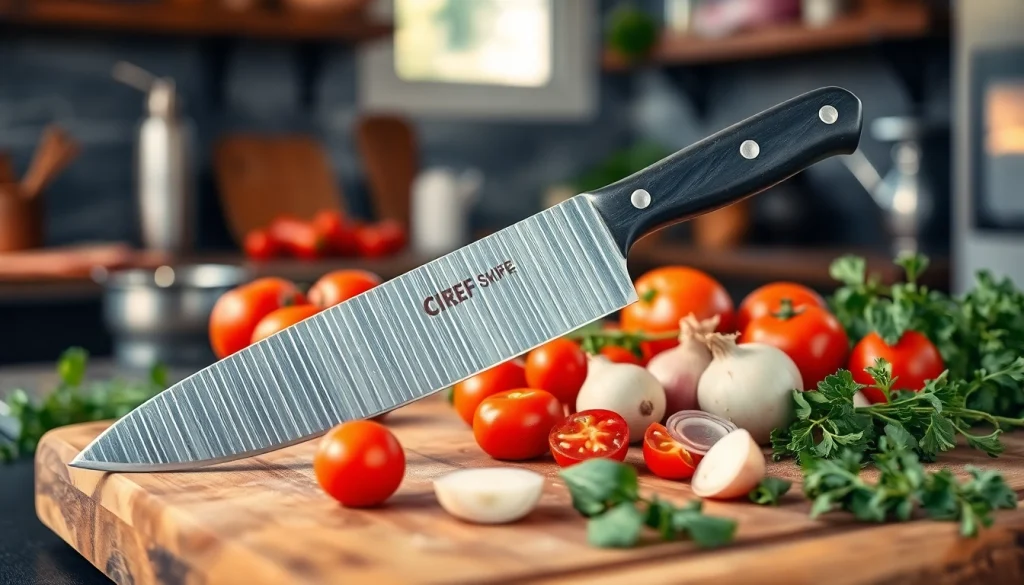
Understanding Chef’s Knives
Definition and Purpose
A chef’s knife is a versatile kitchen tool designed for a range of tasks, from chopping vegetables to slicing meat. Typically measuring between 6 to 12 inches in length, its broad, curved blade allows for a rocking motion while cutting, making it indispensable in any kitchen. It is often referred to as the workhorse of the kitchen due to its ability to perform multiple functions effectively.
Importance of a High-Quality Knife
Investing in a high-quality chef’s knife significantly enhances cooking performance and safety. A well-constructed knife not only makes chopping and slicing easier but reduces the risk of injury caused by dull or poorly designed blades. Quality knives retain their sharpness longer, require less frequent sharpening, and ultimately make the cooking experience more enjoyable.
Types of Chef’s Knives
Chef’s knives come in several styles, each tailored to different culinary needs. Common types include:
- German Chef’s Knife: Known for its broad blade and heft, making it suitable for heavy-duty tasks.
- Japanese Chef’s Knife: Usually lighter with a thinner profile, emphasizing precision and technique.
- Chinese Chef’s Knife: Features a rectangular blade, often used for chop and lift actions as well as chopping materials.
Key Factors to Consider
Material and Blade Construction
The material of the blade plays a crucial role in its performance. Most chef’s knives are made from stainless steel, high-carbon steel, or ceramic. Stainless steel is resistant to rust and easy to maintain, while high-carbon steel offers superior sharpness but may require more care to prevent tarnishing. Ceramic knives are lightweight and never rust, but they are more brittle and can chip or break easily.
Weight and Balance
Finding the right weight and balance is essential for comfortable handling. A well-balanced knife should feel comfortable in hand, providing the right amount of weight for efficient use. Heavier knives can be advantageous for cutting through dense materials, while lighter knives allow for more delicate movements and are less tiring to use over extended periods.
Handle Design and Comfort
When selecting a chef’s knife, examining the handle is crucial. Various materials like wood, plastic, and composite materials provide different grips and comfort levels. A comfortable handle should fit your hand securely, allowing for a firm grip without slipping. Ergonomically designed handles can help reduce hand fatigue, which is vital for long cooking sessions.
How to Test a Chef’s Knife
Grip and Handling
Testing a knife’s grip involves holding it as you would while cooking. Ensure it feels balanced and comfortable, allowing for a natural grip. When testing, try different cutting motions to see how well the knife handles each task, paying attention to any discomfort in your hand.
Cutting Performance
To evaluate cutting performance, perform various tasks such as slicing, dicing, and chopping. A good chef’s knife should glide through ingredients with minimal resistance. Assess the responsiveness of the knife when handling different foods, from soft herbs to denser vegetables.
Safety Features to Look For
Safety is paramount when using a chef’s knife. Look for features like a bolstered tang, which helps with stability, and non-slip handles that provide a better grip. Additionally, a blade with a slight curve can prevent accidental slips as you cut, making the knife safer to handle.
Price Range and Value
Understanding Investment in Quality
Quality chef knives can range widely in price, from budget options to premium offerings. While expensive knives often feature superior materials and craftsmanship, it’s essential to consider what you need in a knife before making a purchase. A good rule of thumb is to invest in a quality knife that fits your cooking habits rather than the most expensive option available.
Where to Buy
Purchasing a chef’s knife can be done through various outlets, including kitchenware stores, online retailers, and specialty knife shops. When buying online, ensure that the seller has a good return policy; this allows you to test the knife at home and ensure it meets your needs.
Balancing Cost with Quality
Finding the right balance between cost and quality can be challenging. Start by setting a budget that reflects your cooking needs and frequency of use. Remember that investing in a quality chef’s knife is an investment in your culinary skills, offering years of efficient use if properly cared for.
FAQs About Choosing a Chef’s Knife
What is the ideal length for a chef’s knife?
The ideal length for a chef’s knife typically ranges from 8 to 10 inches, providing a balance between control and versatility for various cutting tasks.
How often should I sharpen my chef’s knife?
Sharpen your chef’s knife every few months for regular use. Professional chefs may sharpen their knives weekly or monthly, depending on frequency and type of use.
Is a heavier knife better than a lighter one?
Not necessarily; it depends on personal preference and the type of cooking. Heavier knives can tackle dense ingredients, while lighter knives offer more agility for delicate tasks.
What materials are best for chef’s knife blades?
High-carbon stainless steel is highly regarded for its durability and sharpness, while traditional high-carbon steel offers exceptional edge retention with proper care.
Can I choose a chef knife as a beginner chef?
Yes! Choose a knife that feels comfortable to hold and easy to use. A well-balanced, 8-inch chef’s knife is typically recommended for beginners.
For more insights on how to choose a chef’s knife, exploring different options will enhance your cooking experience.